
P.V.C Form Board
PVC Foam Board Profile
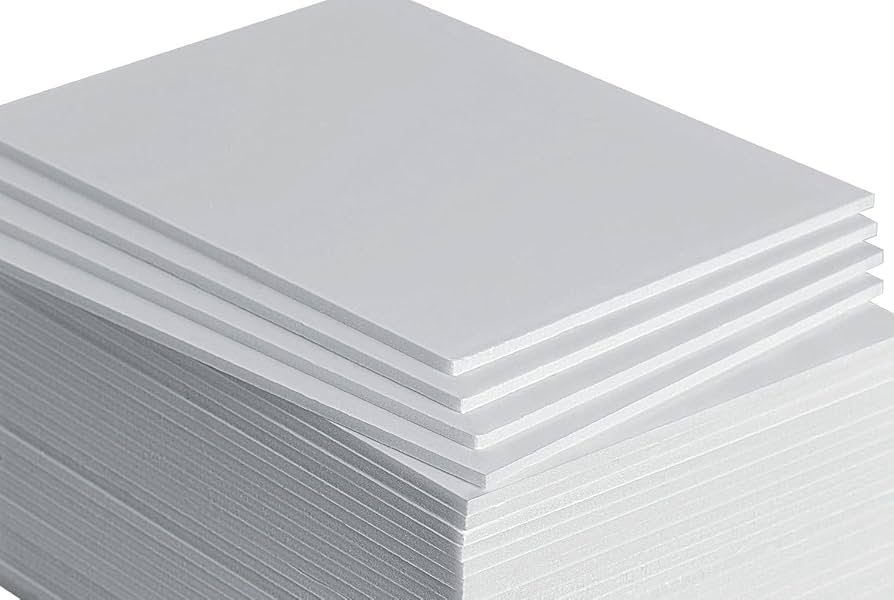
PVC Foam Board (often called PVC Form Board or Expanded PVC) is a lightweight, rigid plastic material used as a high-performance alternative to wood-based boards like MDF or Plywood. While it isn’t a PG Bison wood-based product, it is a staple in the cabinetry and signage industries due to its extraordinary resistance to the elements.
Key Features and Aesthetic
PVC Foam Board is valued for its technical properties rather than its “natural” looks, though it is highly customizable.
-
Composition: It is made from Polyvinyl Chloride (PVC) and polyurea, which are foamed under pressure. This creates a closed-cell structure that is incredibly light yet rigid.
-
Surface Finish: It typically comes in a smooth, matte white finish. Because the surface is non-porous and “plastic-slick,” it is excellent for digital printing, painting, or laminating with high-pressure laminates (HPL).
-
The Feel: It is significantly lighter than wood (about 50% lighter than MDF). While it feels like plastic to the touch, it is dense enough to be worked with standard woodworking tools (saws, drills, and routers).
Primary Applications
PVC Foam Board is the “problem solver” material for areas where wood usually fails:
-
Waterfront & Marine Cabinetry: Ideal for vanity units in bathrooms, kitchen cupboards under sinks, and boat interiors because it is 100% waterproof and will never rot, swell, or delaminate.
-
Outdoor Kitchens: Since it is termite-proof and weather-resistant, it is a top choice for outdoor braai areas and garden furniture.
-
Signage and Displays: Because it is so light and takes ink/paint well, it is the industry standard for exhibition stands, retail signage, and point-of-sale displays.
-
High-Hygiene Zones: Its non-porous surface doesn’t harbor bacteria, making it popular in laboratory and hospital cabinetry.
Pros and Cons
Technical Specifications
-
Standard Size: 2440mm x 1220mm (Standard) or 3050mm x 1560mm (Large).
-
Thickness Range: Available from 1mm up to 30mm (16mm and 18mm are most common for cabinets).
-
Density: Usually ranges between to .
-
Color: Predominantly white, but also available in grey and black

-
Free shipping anywhere in Zimbabwe
-
Delivers in: 3-7 Working Days Shipping & Return
PVC Foam Board Profile
PVC Foam Board (often called PVC Form Board or Expanded PVC) is a lightweight, rigid plastic material used as a high-performance alternative to wood-based boards like MDF or Plywood. While it isn’t a PG Bison wood-based product, it is a staple in the cabinetry and signage industries due to its extraordinary resistance to the elements.
Key Features and Aesthetic
PVC Foam Board is valued for its technical properties rather than its “natural” looks, though it is highly customizable.
-
Composition: It is made from Polyvinyl Chloride (PVC) and polyurea, which are foamed under pressure. This creates a closed-cell structure that is incredibly light yet rigid.
-
Surface Finish: It typically comes in a smooth, matte white finish. Because the surface is non-porous and “plastic-slick,” it is excellent for digital printing, painting, or laminating with high-pressure laminates (HPL).
-
The Feel: It is significantly lighter than wood (about 50% lighter than MDF). While it feels like plastic to the touch, it is dense enough to be worked with standard woodworking tools (saws, drills, and routers).
Primary Applications
PVC Foam Board is the “problem solver” material for areas where wood usually fails:
-
Waterfront & Marine Cabinetry: Ideal for vanity units in bathrooms, kitchen cupboards under sinks, and boat interiors because it is 100% waterproof and will never rot, swell, or delaminate.
-
Outdoor Kitchens: Since it is termite-proof and weather-resistant, it is a top choice for outdoor braai areas and garden furniture.
-
Signage and Displays: Because it is so light and takes ink/paint well, it is the industry standard for exhibition stands, retail signage, and point-of-sale displays.
-
High-Hygiene Zones: Its non-porous surface doesn’t harbor bacteria, making it popular in laboratory and hospital cabinetry.
Pros and Cons
Technical Specifications
-
Standard Size: 2440mm x 1220mm (Standard) or 3050mm x 1560mm (Large).
-
Thickness Range: Available from 1mm up to 30mm (16mm and 18mm are most common for cabinets).
-
Density: Usually ranges between to .
-
Color: Predominantly white, but also available in grey and black